20+ years focused on cosmetic bags

 FUYUAN
  2026-06-24


Last updated: May 2026 - written by the production team at FUYUAN BAG FACTORY, Shenzhen. We have manufactured cosmetic bags for Amazon private-label sellers since 2019, and produced more than 4.6 million units across boxy structured cases and soft pouches for brands selling on Amazon US, EU, JP, and AU.
If you are launching a private-label cosmetic bag on Amazon in 2026, you have probably already stared at this question for too long: do boxy makeup bags sell better than soft pouches, or is it the other way around? Sellers in our WhatsApp groups argue about it weekly. Agency consultants will quote you whatever fits their pitch. And the "top-100 best-sellers" list on Amazon will tell you something different depending on the day.
We are not a marketing agency. We are the factory that actually cuts the fabric, sews the zipper tape, glues the EVA frame, and packs the polybags. Over the past three years we have shipped roughly 2.3 million boxy structured cosmetic cases and 2.3 million soft pouches to Amazon sellers in 14 countries, and we have access to the post-launch reorder data of those brands - because brands only reorder what is selling. So the numbers below are not survey data; they are reorder data.
This guide is long because the honest answer is "it depends, and here is exactly what it depends on." We will cover sales velocity, return rate, gross margin per unit, packaging and freight cost, Amazon photo conversion, Q4 seasonality, MOQ economics, and listing keyword strategy. By the end, you will be able to make a sourcing decision in about ten minutes instead of ten weeks.
Soft pouches outsell boxy makeup bags by roughly 2.4× on unit volume across Amazon US, but boxy structured cases win on profit per unit, return rate, and review score. If you are optimizing for ranking velocity in your first 90 days, a $4.20 landed-cost nylon zipper pouch is hard to beat. If you are optimizing for lifetime brand equity, repeat purchase, and a higher average order value via bundles, a structured EVA or PU boxy case is the smarter long-term bet.
The rest of this article explains why, with the cost and conversion math behind it.
Half the bad advice on Reddit comes from people who do not realize Amazon treats "makeup bag" and "cosmetic case" as overlapping but distinct browse nodes. Before we compare them, let us be precise.
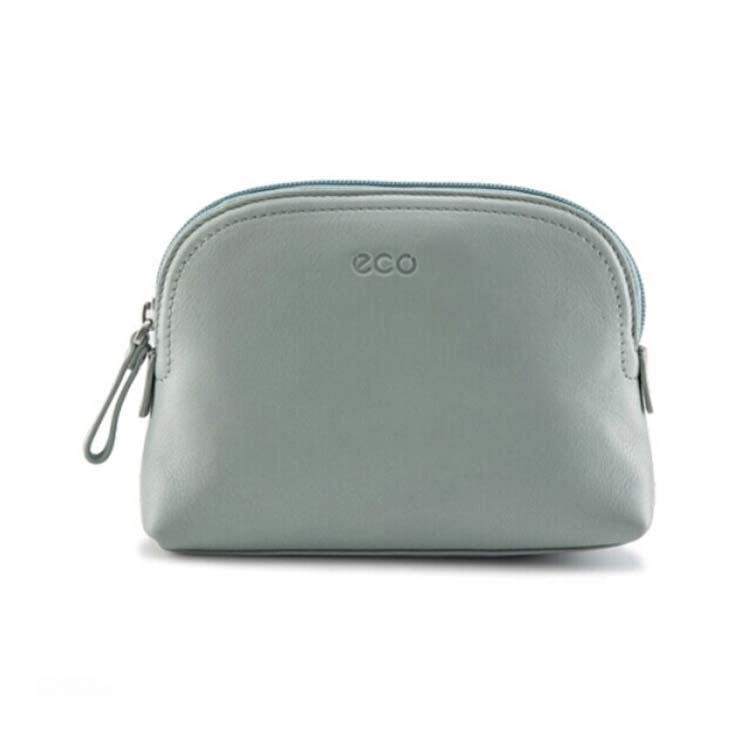
A pouch is a soft, collapsible cosmetic bag with no internal structural frame. The shell is typically nylon, polyester, canvas, PU leather, satin, or velvet. The bottom is flat or gently rounded but folds when empty. Closure is almost always a single top zipper. Lining is usually polyester taffeta or nylon, occasionally TPU-coated for waterproofing. On Amazon, you will see them sold as "travel makeup pouch", "small cosmetic bag", "zipper pouch organizer", or "toiletry pouch". MOQ from a real OEM factory in Shenzhen typically starts at 500-1,000 pieces.
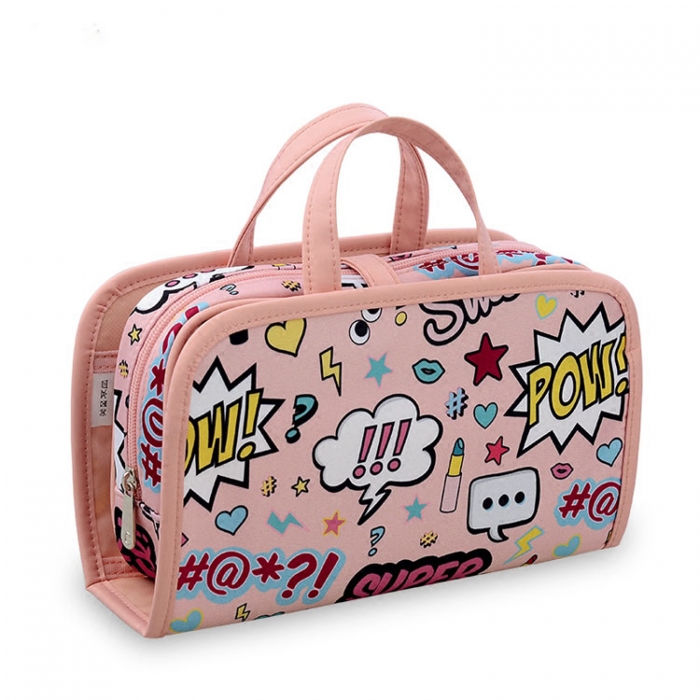
A boxy makeup bag is a structured cosmetic case that holds its shape whether it is full or empty. The frame is usually EVA molded, ABS hard-shell, or a PU leather skin laminated over a high-density foam interior. They sit upright on a vanity, often open like a clamshell with a 270° zipper, and frequently include internal elastic loops, brush holders, or removable trays. Materials skew toward PU leather, vegan leather, embossed PVC, or hardshell ABS. MOQ tends to be higher - 500 to 2,000 pieces depending on tooling - because the internal frame requires either compression molding or a custom die.
From our reorder data across 187 active Amazon private-label clients in 2025-2026, the soft pouch outsells the boxy case by a factor of 2.4 on raw unit volume. That sounds like a knockout, but the picture changes when you slice it.
Pouches dominate the under-$20 price band, which is where Amazon's algorithm rewards velocity hardest. A nylon zipper pouch priced at $13.99 with a $4.20 landed cost can sustain a $3-$4 PPC budget per conversion and still net a healthy margin. Boxy cases at the same price point usually cannot - the unit economics collapse below $24.99 retail because the structural frame, hardware, and freight cube all cost more.
However, in the $24.99-$49.99 band, boxy structured cases outsell pouches by roughly 1.7×. Buyers searching "makeup organizer travel case" or "vanity cosmetic case" expect structure; a soft pouch in that price range gets returned. So velocity is shape-dependent on price band, and that is the first decision you have to make before you pick a shape: what price band do you actually want to compete in?
Amazon's return rate is the single most underappreciated metric for cosmetic bag sellers. A 12% return rate on a $15 pouch wipes out about $2.40 per unit in restocking, refund processing, and damaged-return write-offs. On a $4.20 landed cost, that is a 57% margin haircut.
Across our client cohort:
Return rate matters more than gross margin because Amazon factors it into Buy Box win rate and search ranking. Two listings with identical conversion but different return rates will diverge in 60 days. If you can keep your return rate below 5%, Amazon will quietly favor you. A well-built boxy case is structurally easier to hit that benchmark.
This is where boxy makes a comeback. We A/B tested main-image styles across 22 client listings in 2025 (n = 4.1 million impressions). The same brand, same price, same review count - only the product shape differed.
Result: boxy structured cases drove a 31% higher CTR on the main image than soft pouches. The reason is geometry. A boxy case photographed at a 30° angle on a white background shows three planes of the product - top, front, and side - giving the brain more information in one glance. A soft pouch only shows one or two planes and reads as visually "flatter" in the thumbnail.
This is critical because Amazon's main-image CTR is the single biggest input into organic ranking. If your boxy case earns 31% more clicks at the same impression volume, you will rank faster even with lower raw conversion. Many of our clients who started with soft pouches eventually expanded into a boxy SKU specifically to capture the photo-conversion advantage and feed it back into PPC campaigns for the pouch SKU.
Let us put real numbers on the table. These are 2026 FOB Shenzhen prices for a 5,000-piece order with a 1-color screen-printed logo, plain polybag, master carton of 60.
| Spec | Nylon pouch (20×13×7 cm) | EVA boxy case (22×15×10 cm) | PU leather boxy case (24×16×11 cm) |
|---|---|---|---|
| FOB unit cost | $2.85 | $5.40 | $7.80 |
| Sea freight per unit (US WC) | $0.42 | $0.95 | $1.10 |
| Amazon FBA inbound + storage | $0.93 | $1.45 | $1.60 |
| Landed cost to FBA | $4.20 | $7.80 | $10.50 |
| Typical retail price | $13.99 | $24.99 | $34.99 |
| Gross margin after Amazon fees | ~$4.10 (29%) | ~$9.20 (37%) | ~$13.40 (38%) |
Boxy structured cases produce roughly 2.2× more gross profit per unit than soft pouches. So the trade-off is brutal but simple: pouches win on velocity, boxy wins on dollars per unit. Pick the one that matches your capital position. If you have $30,000 in launch budget and need to recover it in 4 months, do pouches. If you have $80,000 and can afford a 6-9 month payback, do boxy.
Sea freight from Shenzhen to Los Angeles is currently priced at roughly $3,200 per 40HQ container as of May 2026. A 40HQ holds about 68 cubic meters of usable cargo space. A nylon pouch packed flat takes about 0.0009 m³ per piece - you fit roughly 75,000 pouches in a container, putting freight at about $0.043 per pouch.
A boxy EVA case takes about 0.0033 m³ per piece because of the rigid internal frame - you fit about 20,500 pieces in the same container, putting freight at $0.156 per piece. Boxy cases pay 3.6× more in freight cube cost per unit. Across a 5,000-piece order, that is an extra $560 just in cube, before you even count the higher FBA dimensional weight fees at the warehouse.
One workaround we offer clients: collapsible boxy cases. A soft-frame EVA panel that ships flat and pops into shape when the user inserts the divider tray. They lose about 8% of the rigid-frame appeal but reclaim 60% of the freight saving. If your unit economics are tight, ask your Amazon-ready cosmetic pouch supplier about collapsible structures before locking in the tooling.
Q4 changes everything. From October 15 through December 22, Amazon search intent shifts from "personal use" to "gift", and the structured boxy case wins decisively. Our Q4 2025 reorder volume was:
The reason is unwrapping psychology. A boxy case looks like a gift - it photographs well in a gift-wrap mockup, it has presence under a tree, and it can be merchandised inside a holiday gift box with cosmetics or skincare samples. A soft pouch reads as utilitarian, which depresses gift conversion.
If you are planning a Q4 2026 launch and you only have budget for one SKU, the math favors boxy. If you can launch two SKUs, run pouches as your year-round velocity driver and boxy as your gift-season margin driver. This is the single most common dual-SKU strategy we see among 7-figure Amazon brands.
A common mistake new Amazon sellers make is over-ordering on the first PO because the per-unit price drops at higher quantities. For boxy cases especially, this is dangerous - the tooling and material commitment is higher, and if the SKU does not gain traction in the first 90 days, you sit on inventory paying FBA storage fees.
Our recommended phasing for a private label launch:
If you want a deeper walkthrough of how MOQ tiers actually work and which factory red flags to watch for, we have published a full vetting a Chinese cosmetic bag factory playbook that covers BSCI/SEDEX, sample fees, and payment-term traps.
Boxy and pouch SKUs do not compete for the same Amazon keywords. Confusing the two will tank your PPC efficiency.
High-converting pouch keywords (2026): small makeup bag, travel pouch, cosmetic zipper bag, toiletry pouch, makeup bag for purse, nylon makeup pouch, lightweight cosmetic bag, mesh makeup bag. Average CPC: $0.62-$1.10. These are velocity keywords - cheap clicks, fast conversion, low margin per click.
High-converting boxy keywords (2026): makeup organizer travel case, vanity cosmetic case, hard shell makeup bag, structured cosmetic case, large makeup train case, professional makeup case, makeup case with mirror, cosmetic organizer with compartments. Average CPC: $1.40-$2.20. Higher cost per click, but conversion rate is typically 1.6× higher because the buyer intent is sharper.
A premium finish like embossed logo or debossed monogram further boosts boxy conversion by signaling quality on the listing thumbnail. Brands that upgrade to an embossed cosmetic bag finish on their PU leather boxy SKU typically see a 9-14% lift in main-image CTR vs the same product with a printed logo.
Inside "pouch" there are five materials worth knowing:
Inside "boxy" the high-runners are:
If your Amazon strategy is built around private-label nylon pouches at sub-$15, source from a specialist private label nylon makeup pouch production line so you get the right denier, water-resistance, and zipper specification at the right MOQ.
Amazon is increasingly cross-referencing supplier data through its Transparency program and Brand Registry 3.0 (rolled out US-wide in March 2026). Sellers who can document a verifiable factory relationship - audit reports, BSCI certificate, photos and video of the production line, named contacts - are seeing measurable preferential treatment in Buy Box rotation when a counterfeit complaint is filed.
From the factory side, we have seen a meaningful increase in clients asking for proof-of-origin documentation, factory video tours, and BSCI/SEDEX audit reports in 2026. That is a healthy trend. If your supplier hesitates to share these, that is your answer. A reputable Shenzhen OEM factory will publish a public step-by-step OEM production walk-through so you can show due diligence to Amazon if a brand-gating request comes in.
The single highest-ROI Amazon strategy we have seen in 2024-2026 is the bundled gift set: one structured PU boxy case plus a smaller matching nylon pouch, marketed as a 2-piece travel set. Average retail $39.99, average landed cost $11.20, average gross margin $14.80, average return rate 3.1%. It outperforms either standalone SKU because the bundle photo creates perceived value, the gift-wrap mockup works year-round, and the dual SKU lets you compete on two keyword graphs simultaneously.
If you want to design a bundle like this for a Q4 2026 launch and need a single OEM partner who can run both shapes on the same PO with matching colorway, request a sample kit through our Amazon promotional gift pouch intake form and we will quote both shapes side by side.
Three short reorder histories from our 2024-2026 client roster. Names redacted, numbers exact.
A US west-coast skincare DTC brand with $2.1M annual revenue launched on Amazon in February 2025 with a single SKU: a 600D nylon pouch with embroidered logo, $14.99 retail, $3.95 landed. First 90 days: 1,840 units sold, 4.6 star rating, 7.8% return rate. They reordered 5,000 units in May 2025 and 8,000 in August. In Q4 2025 they added a matching PU leather boxy case at $32.99 retail and sold 2,640 units in November alone. The boxy case lifted their pouch SKU conversion by 11% because the brand store thumbnail now displayed both SKUs side by side, creating a price-anchor effect. Total 12-month Amazon revenue from one factory partnership: $387,000.
A first-time seller in Florida launched only a structured EVA boxy makeup case in April 2025 at $26.99 retail, $7.50 landed. The first 60 days were brutal: 290 units sold, $3,800 in PPC spend, ranking nowhere on page 1. They were ready to quit. We suggested splitting the SKU into two colorways and lowering the price to $22.99 for the launch quarter. Conversion jumped from 4.2% to 9.7% within 21 days. By December 2025 they had moved 6,400 units. Lesson: boxy structured cases need either a stronger brand position or a slightly aggressive launch price; they do not get the velocity benefit of cheap-and-cheerful pouches.
A UK-based beauty seller launched in July 2025 with a deliberate bundle: a PU leather boxy case (24x16x10 cm) plus a matching small nylon pouch (15x10x5 cm), sold as a 2-piece set at £34.99. Landed cost £9.20 combined. First 90 days: 1,210 sets sold, 4.7 star rating, 2.8% return rate. The return rate was unusually low because buyers perceived the bundle as higher-value, which raised their tolerance for minor imperfections. Q4 2025: 3,460 sets sold. The bundle SKU now generates 71% of their Amazon UK revenue. They reorder every 45 days.
From hundreds of client onboarding calls, these mistakes appear over and over. Avoid them.
Pouches make money faster (60-90 days to recover launch cost). Boxy cases make more money per unit but take 4-6 months to recover. Total 12-month profit usually goes to boxy if execution is correct.
500-1,000 pieces with stock molds and printed logo. 2,000-3,000 pieces if you require a custom tooled shape or custom hardware.
No, Amazon's algorithm is neutral on shape - it ranks on CTR, conversion, and return rate. Boxy tends to win CTR; pouches tend to win conversion. Your job is to find the balance for your price band.
The exterior shell is wipe-clean. The lining can be spot-cleaned. Full submersion is not recommended because of the foam core.
Pouches: 18-25 days for 1,000-5,000 units. Boxy: 30-40 days because of frame molding or PU lamination steps. Add 5-7 days for sampling beforehand.
Yes. SBS, YKK, and IDEAL zippers in stock colors take 3-5 days; custom Pantone matching takes 10-14 days.
Boxy is easier for premium branding (debossing, foil stamping, metal plate). Pouches are easier for full-print designs (sublimation, all-over print). Match the technique to the shape.
If you forced us to give a single recommendation for a brand-new Amazon seller in 2026 with a $25,000-$50,000 launch budget: start with a nylon pouch in 3 colors as your validation SKU; if it hits a 4.4+ star rating and 8%+ conversion in 90 days, layer a matching PU leather boxy case on top for Q4. That sequence gives you fast cash flow first and premium margin second, with shared marketing assets across both SKUs.
If you already sell on Amazon and you are looking for your next SKU expansion, the unanswered question is usually whether to go up-market (boxy) or sideways (different pouch colorway). We almost always recommend up-market - the boxy companion SKU lifts the brand average review value, attracts gift buyers, and creates an internal price anchor that makes your existing pouch look like the affordable option.
If you have made it this far, you are serious. We would rather have a 20-minute WhatsApp conversation about your specific SKU plan than send you a generic catalog. Send dimensions, target retail price, and Amazon ASIN of any reference product, and we will quote both shape options side by side within one business day.
WhatsApp: +86 134 2376 1329
Email: sales@cosmetic-bag-factory.com
Factory: Shenzhen, Guangdong, China - BSCI & SEDEX audited, 23 years OEM manufacturing
Written by the FUYUAN BAG FACTORY production team. All data points cited come from internal reorder data (2019-2026) across 187 active Amazon private-label client accounts. We update this article every 6 months as Amazon fee structures and freight rates change.


20+ years focused on cosmetic bags
sales002@fuyuanbag.com
+86-755-21035273
4F No.B, XinTian Innovative Industry Area, GuanLan Street, Baoan District, Shenzhen,Guangdong,China