20+ years focused on cosmetic bags

 FUYUAN
  2026-06-03


By Steven Yuan, FUYUAN BAG FACTORY | Updated: June 3, 2026
If you sell private-label cosmetic bags or makeup pouches on Amazon US, product compliance is the quiet risk that can freeze your cash flow overnight. A listing can be live and profitable on Monday and suppressed on Friday because a customer complaint, a competitor report, or a routine category review flagged a missing safety document. After 20+ years building OEM cosmetic bags in our Shenzhen factory for brands like Coca-Cola and Disney, we have seen which compliance gaps actually get sellers in trouble — and which ones are myths. This guide explains, in plain English, exactly what a cosmetic or makeup bag needs to sell safely on Amazon US in 2026.
Short answer: a standard adult cosmetic bag is treated as a general-use product, not a children's product, so it is not subject to CPSIA children's testing — but it still must comply with California Proposition 65 (phthalates, lead), general substance limits, accurate country-of-origin labeling, and Amazon's own safety-documentation requests. The moment your bag is marketed to children 12 and under, full CPSIA testing and a Children's Product Certificate (CPC) become mandatory. Below we break down every rule, the lab tests that prove it, and a copy-paste pre-shipment checklist.
Key takeaways (2026)
On this page:
Disclaimer: this article is practical guidance from a manufacturer, not legal advice. Always confirm current limits with an ISO 17025 accredited lab (SGS, Bureau Veritas, Intertek, TÜV) and, where stakes are high, a product-safety attorney.
A cosmetic bag looks harmless — it is fabric, a zipper, maybe a vinyl window and some metal hardware. But every one of those parts can carry a restricted substance: phthalate plasticizers in flexible PVC, lead or cadmium in zipper pulls and rivets, azo dyes in printed fabric, formaldehyde in finishing resins, and per- and polyfluoroalkyl substances (PFAS) in water-repellent coatings. US federal law, California state law, and Amazon's own policies each regulate a slightly different slice of this, and they do not wait for each other.
The practical consequences for a seller are concrete. Amazon can request "safety documentation" for any product and suppress the ASIN until you provide it. A private Prop 65 enforcer can serve a "60-Day Notice" that turns into a four- or five-figure settlement. Customs can detain a shipment if labeling is wrong. None of these require an actual injury — they are documentation and labeling failures. The good news: they are almost entirely preventable at the factory stage, which is why your choice of Shenzhen cosmetic bag manufacturer is itself a compliance decision.
This single classification decides most of your compliance burden, so get it right first.
Under the Consumer Product Safety Improvement Act (CPSIA), a children's product is one "designed or intended primarily for children 12 years of age or younger." The Consumer Product Safety Commission (CPSC) weighs four factors: the manufacturer's stated intent, packaging and marketing, whether the product is commonly recognized as for children, and the CPSC's age-determination guidelines. A plain black travel toiletry kit is clearly general-use. A pink pouch printed with cartoon characters, sized for a small hand, and listed under "kids' accessories" is a children's product — even if you call it "for all ages."
General-use cosmetic bags (the vast majority of adult makeup pouches, custom cosmetic bag wholesale orders, and travel organizers) are not subject to CPSIA's mandatory third-party children's testing. They are still consumer products and must not contain banned substances, must be truthfully labeled, and must meet state laws like Prop 65.
Children's cosmetic bags trigger the full CPSIA regime: total lead and phthalate testing by a CPSC-accepted lab, a Children's Product Certificate, and a permanent tracking label. If there is any chance your bag reads as "for kids," budget for this from day one rather than discovering it after a listing takedown.
If your bag is a children's product, here is what the law actually requires:
Note that "accessible" matters: a component a child cannot reach during normal use may be exempt, but graphics, zipper pulls, vinyl panels and trims are all accessible. When we run children's programs, we pre-screen every component — fabric, thread, zipper, slider, rivet, print — so the third-party test is a confirmation, not a gamble.
Even if your bag is general-use and CPSIA-exempt, Prop 65 still applies the instant a Californian can buy it — which, on Amazon US, is always. Prop 65 requires a "clear and reasonable warning" before knowingly exposing someone to any of its hundreds of listed chemicals. For cosmetic bags, the usual suspects are:
You have two compliant paths. Path one: test the materials and confirm exposure is below the safe-harbor level, so no warning is needed. Path two: apply the standard Prop 65 warning on the listing and packaging. Most experienced sellers test first, because an unnecessary warning hurts conversion, while an undisclosed exposure invites a 60-Day Notice from a private enforcer. Switching from PVC to a tested, phthalate-free PU leather cosmetic bag or a polyester makeup bag is often the cleanest fix — you remove the chemical instead of warning about it.
On Amazon specifically, there is a Prop 65 attribute in the listing's compliance section. If your product needs a warning, you must enter the correct warning type and chemical; leaving it blank when a warning is required is itself a policy violation.
Two acronyms confuse many sellers, so let us place them correctly:
REACH is a European Union regulation, not a US one. It restricts Substances of Very High Concern (SVHCs) — including certain phthalates, PAHs, and azo dyes — in goods sold in the EU and UK. If you only sell on Amazon US, REACH is not legally binding, but many buyers and retailers still request a REACH report as a quality signal, and you will need it the day you expand to Amazon UK or DE. We provide REACH-aligned testing on request so your bag is export-ready for both markets.
RoHS restricts hazardous substances in electrical and electronic equipment. A plain cosmetic bag is not electronic — but if you add an LED light, a USB heating pad, or a Bluetooth tracker, that component pulls the product into RoHS scope. Keep "smart" features in mind before you design them in.
Beyond these, the substances most worth testing for in textile bags are azo dyes (which can release carcinogenic aromatic amines), formaldehyde (from anti-wrinkle and printing resins), nickel release (from metal hardware that contacts skin), and heavy metals in pigments. None of these are exotic; a competent OEM cosmetic bag manufacturing partner controls them through approved supplier lists and incoming-material checks.
The fastest-moving area in 2026 is PFAS — the "forever chemicals" used to make fabrics water- and stain-repellent. California's textile PFAS law (AB 1817) took effect January 1, 2025, restricting intentionally added PFAS in most textile articles sold in the state, and New York enacted a parallel restriction. Several other states have followed.
Why does this matter for a makeup bag? Because the very feature many sellers advertise — "waterproof," "water-resistant," "spill-proof" — historically relied on PFAS-based finishes. In 2026, selling a "waterproof" textile cosmetic bag into California without confirming it is PFAS-free is a real exposure. The fix is straightforward: specify a PFAS-free durable water-repellent (DWR) finish, or use an inherently water-resistant construction such as coated PVC or TPU with tested, compliant plasticizers. We document the finish chemistry on every "waterproof" program so your marketing claim and your compliance status match.
Different shells carry different risks. Use this as a starting map, then confirm with lab data for your specific construction:
| Material | Main compliance watch-points | Typical fix |
|---|---|---|
| PVC / clear vinyl | Phthalate plasticizers (Prop 65, CPSIA if children's) | Use phthalate-free / DOTP plasticizer; lab-test |
| PU leather | DMFa residues; some coatings carry phthalates | Eco-PU, REACH-aligned supplier, test coating |
| Polyester | Azo dyes, formaldehyde, PFAS if "waterproof" | OEKO-TEX yarn, PFAS-free DWR |
| Cotton canvas | Formaldehyde resins, azo dyes, pesticide residues | Low-formaldehyde finish, certified dyes |
| Nylon | Azo dyes, PFAS coatings | Certified dye-house, PFAS-free finish |
| Metal hardware | Lead, cadmium, nickel release | Lead-free alloy, nickel-tested plating |
This is exactly why material choice is a strategy conversation, not an afterthought. Picking the right shell up front can eliminate an entire category of testing and warnings.
"Compliance testing" is not one test — it is a small panel matched to your material and market. Typical components for a cosmetic bag program:
| Test | What it proves | When you need it |
|---|---|---|
| Total lead / lead in coating | CPSIA limits met | Children's products (and good practice for trims) |
| Phthalates (8P) | CPSIA & Prop 65 for plasticized parts | Any PVC/vinyl/soft-plastic component |
| Heavy metals (Pb, Cd, Ni) | Prop 65 / EU limits on hardware & pigments | Metal zippers, rivets, chains, prints |
| Azo dyes & formaldehyde | Restricted textile substances | Dyed/printed fabric bags |
| PFAS (total fluorine / targeted) | State textile bans (CA, NY) | "Waterproof"/water-repellent textile bags |
| REACH SVHC screen | EU/UK market readiness | If you sell or plan to sell in Europe |
A focused panel for a single-material adult bag is usually modest; a full children's program with multiple component parts costs more because each accessible part is tested. The cost-saving move is to consolidate: test a representative construction once, keep the report on file, and reuse it across colorways that share the same fabric, dye, and hardware. We help clients design the smallest valid test scope so you are covered without paying for redundant reports.
When Amazon requests "safety documentation," sellers panic because they have the goods but not the paperwork. Build the file before you launch. A complete cosmetic-bag compliance file contains:
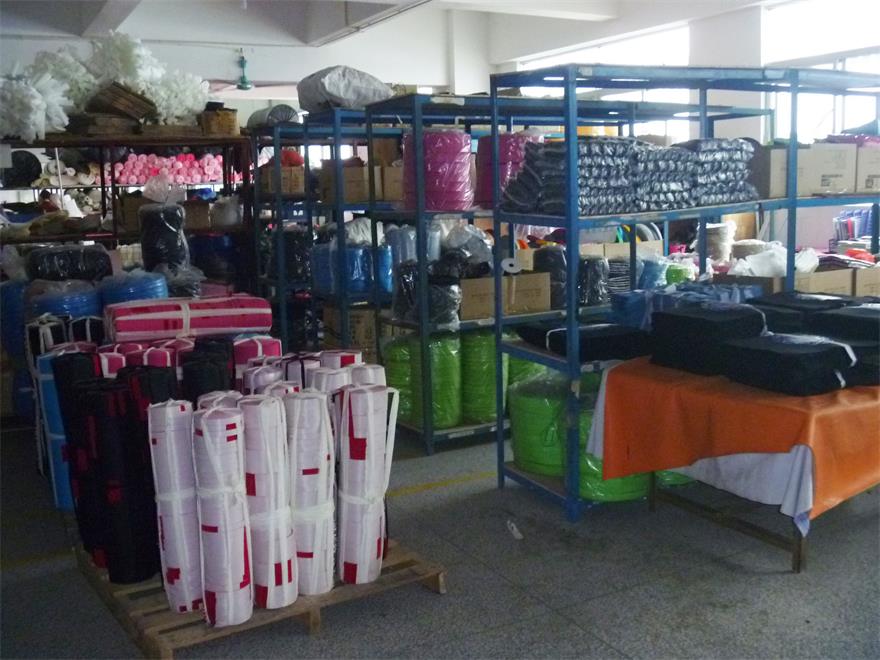
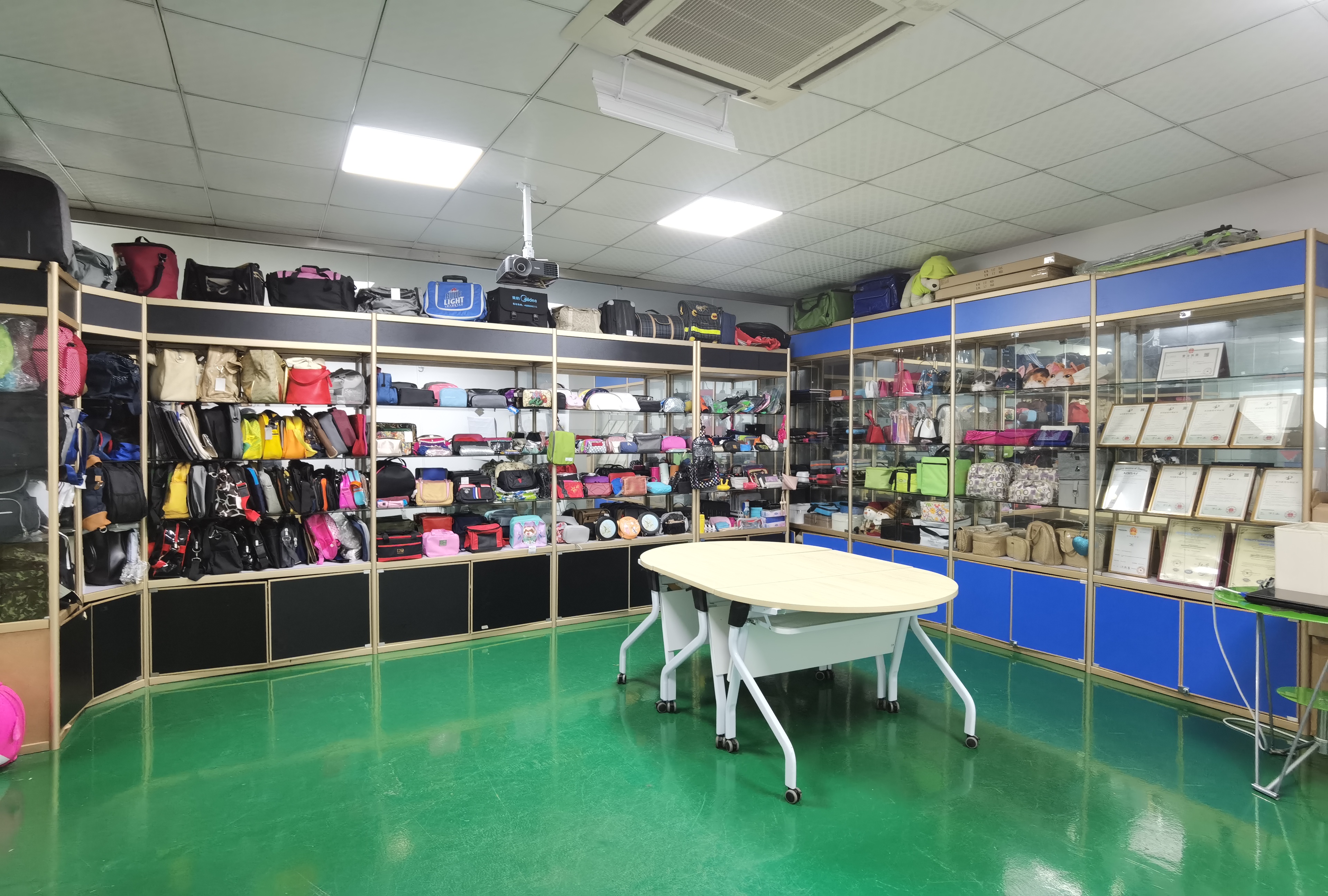
Because we are an audited factory (BSCI, SEDEX, ISO 9001, and approved under Disney FAMA and Coca-Cola compliance programs), much of this file is generated as a by-product of how we already run production. You can review real examples in our brand case studies with global clients.
Compliance is not only chemistry — labeling errors detain shipments and trigger returns just as fast. For Amazon US cosmetic bags:
We handle origin marking, tracking labels, FNSKU application, and FBA-compliant polybagging on the line, so cartons arrive at the warehouse ready to receive. The details of our flow are documented on our production flow page.

Here is the honest truth most sourcing guides skip: you cannot inspect compliance into a finished bag. By the time goods are sewn, the fabric, dye, plasticizer and plating are already chosen. Compliance is decided at material approval and protected through process control. A factory built for export-grade brands gives you three layers of protection:

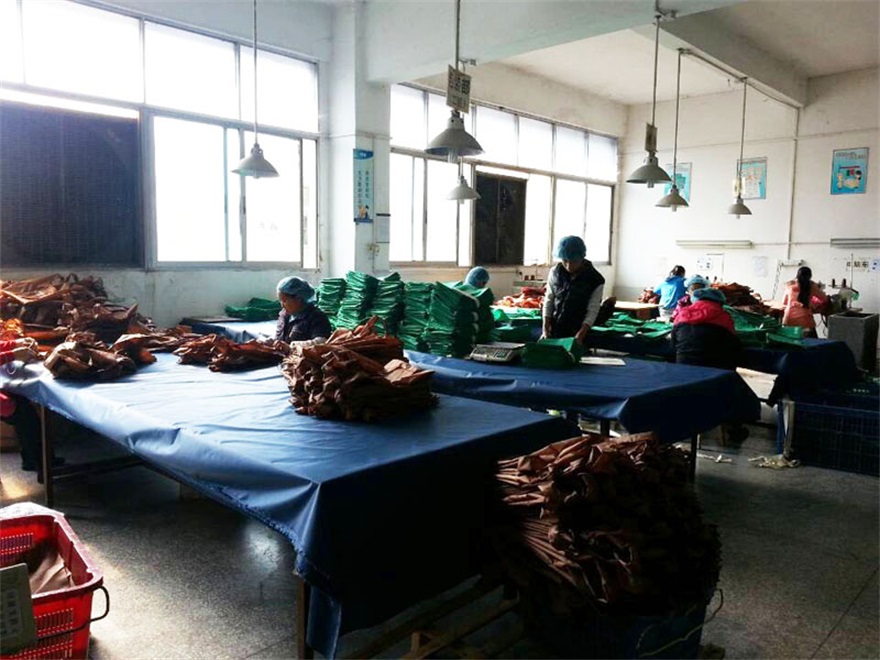
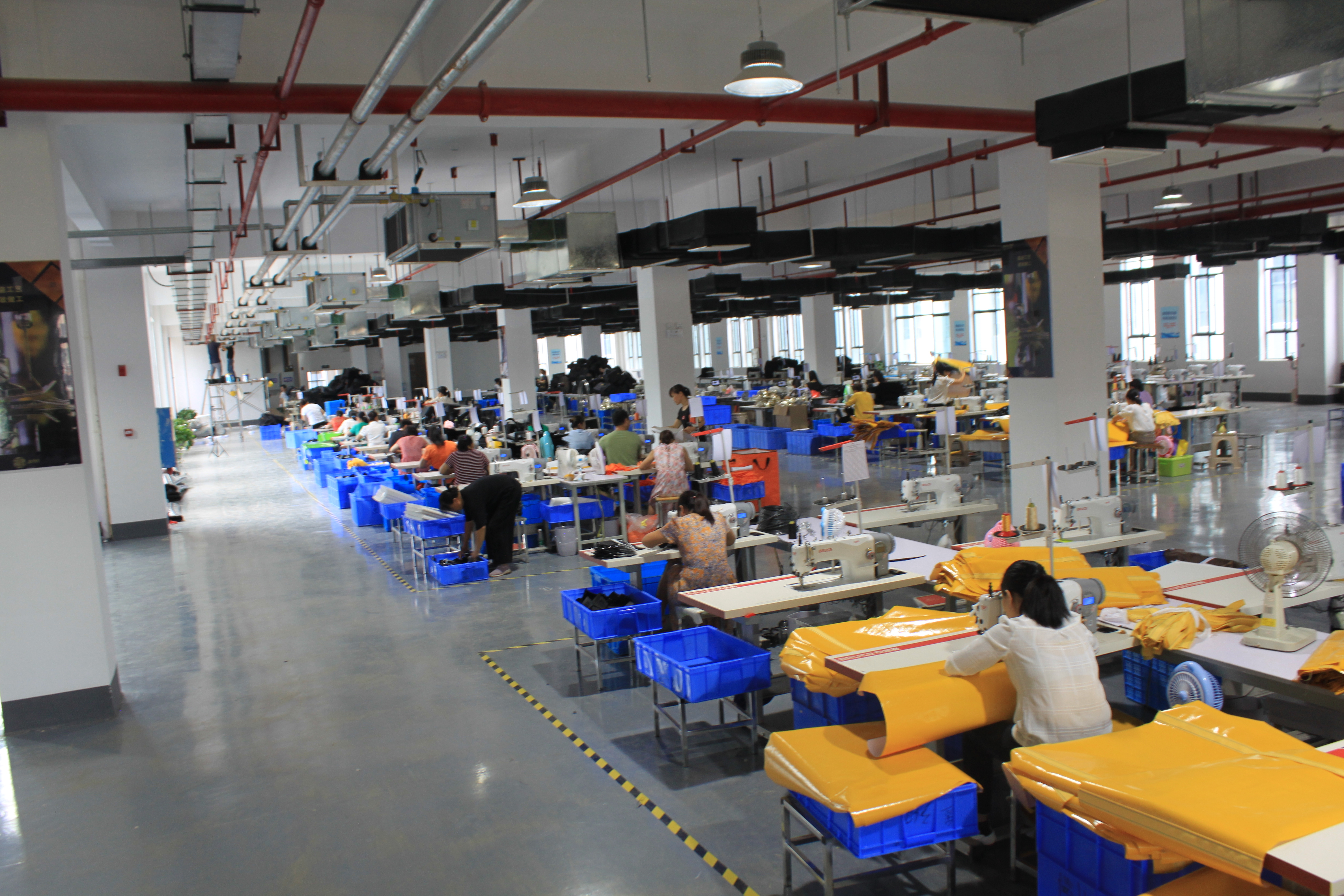
With 20+ years of OEM/ODM experience, 100+ skilled workers, 100+ industrial sewing machines and 2,000+ m² of in-house production, our process is designed so that the documentation a US seller needs already exists when the order ships.
Chemical test reports prove what a single sample contained on one day. Social and quality audits prove that a factory runs a controlled, repeatable process — which is why sophisticated buyers ask for both. When a brand's compliance team reviews a new supplier, the audit certificates often matter as much as the lab data, because they show the system that keeps every future batch compliant, not just the sample you sent.
The audits most relevant to a cosmetic-bag program are:
We maintain BSCI, SEDEX and ISO 9001, and we are approved under Disney FAMA and Coca-Cola compliance programs. For a seller, that means the hardest part of vendor due diligence is already done — you inherit a supply chain that brand compliance teams have already stress-tested. If you want to see how this plays out on real programs, our customer case studies walk through cooperation with global names, and our company background explains the dual-factory setup in Shenzhen and Jiangxi that gives us capacity without cutting corners.
A mistake we see with fast-growing brands is treating "compliance" as a one-time checkbox tied to a single marketplace. In reality the requirements shift as you grow, and it is far cheaper to build for the destination you will reach than to re-test later:
The smart play is to define your 12-to-24-month channel roadmap at the design stage and test once to the strictest standard you will plausibly need. A bag built to a retailer RSL and screened for REACH is automatically fine for Amazon US — not the other way around. This is the kind of forward planning we build into every OEM and private-label program, so a product that starts on Amazon US can move into Europe or onto retail shelves without a second sourcing cycle.
Finally, remember that lead time and compliance are linked. Lab testing typically adds one to two weeks to a first production run, and rushing it is exactly how undocumented goods end up shipped. Building a realistic 7–15 day production window plus testing into your timeline — rather than discovering it at the end — is the single most effective way to launch on schedule and stay on the listing once you are live.
No — an adult, general-use cosmetic bag is not a children's product, so CPSIA's mandatory children's testing does not apply. It must still meet Prop 65 and labeling rules. The moment the bag is marketed to children 12 and under, CPSIA testing and a CPC become required.
Only if it can expose a Californian to a listed chemical above the safe-harbor level. The cleanest approach is to test the materials: if results are below the threshold, no warning is needed; if not, either reformulate (for example, switch from PVC to tested PU or polyester) or apply the warning.
No. REACH is an EU/UK regulation. It is not legally required for US-only sales, but many buyers request it and you will need it to expand into Europe, so it is worth having on file.
Yes, if the water resistance does not rely on intentionally added PFAS. Specify a PFAS-free DWR finish or an inherently water-resistant material like compliant TPU/PVC, and keep the finish statement on file.
A report stays valid as long as the material, supplier, dye and hardware are unchanged. Any substantive change to the construction means you should re-test, because your compliance file must match the goods you actually ship.
Yes. As an audited manufacturer, we provide third-party test reports, a Declaration/Certificate of Conformity, Prop 65 data, a bill of materials and factory audit certificates as part of the order. You can contact our team to scope the exact panel for your product.
Compliance should never be the reason a good product gets pulled from Amazon. If you are launching or re-sourcing a private-label cosmetic bag, we can help you pick compliant materials, scope the smallest valid test panel, and ship with a complete documentation file. Explore our custom cosmetic bag wholesale range and OEM/private-label service, or reach us directly at +86-755-21035273 / sales002@fuyuanbag.com. We have kept brands like Coca-Cola and Disney compliant for two decades — we can do the same for your listing.


20+ years focused on cosmetic bags
sales002@fuyuanbag.com
+86-755-21035273
4F No.B, XinTian Innovative Industry Area, GuanLan Street, Baoan District, Shenzhen,Guangdong,China