20+ years focused on cosmetic bags

 FUYUAN
  2026-06-07


By Steven Yuan, FUYUAN BAG FACTORY | Updated: June 7, 2026
Shipping custom cosmetic bags from China to Amazon FBA is a five-step chain: your factory finishes and quality-checks the goods, applies FBA-compliant polybags and FNSKU labels, packs them into export cartons, hands them to a freight forwarder who books air or sea freight and clears US customs, and finally delivers the cartons (or palletized freight) to the Amazon fulfillment center named on your shipping plan. Get any one of those links wrong — a missing FNSKU, an oversized carton, an undeclared HTS code — and Amazon can refuse the shipment, charge you unplanned prep fees, or freeze receiving for days while your listing goes out of stock.
For most private-label cosmetic bag sellers, the cheapest reliable route is sea freight (LCL or FCL) on a DDP basis with FBA prep done at the factory: the unit cost is far lower than air, the factory labels everything correctly before it leaves China, and the forwarder handles duties and final-mile delivery to the warehouse. Air or express courier is reserved for launches, replenishment emergencies, and small first orders where speed beats per-unit economics. This guide walks through every decision — freight mode, landed cost, tariffs, FNSKU labeling, carton rules, lead times, and the receiving errors that quietly eat your margin — written from 20+ years of shipping OEM cosmetic bags out of Shenzhen.
Disclaimer: This article is general sourcing and logistics guidance, not legal, customs, or tax advice. Tariff rates, HTS classifications, and Amazon policies change frequently. Always confirm current duty rates and FBA requirements with a licensed customs broker and Amazon Seller Central before you ship.
Every shipment of custom cosmetic bags from China to an Amazon US fulfillment center follows the same physical path, even though sellers describe it a dozen different ways. Understanding the chain makes it obvious where time and money leak out.
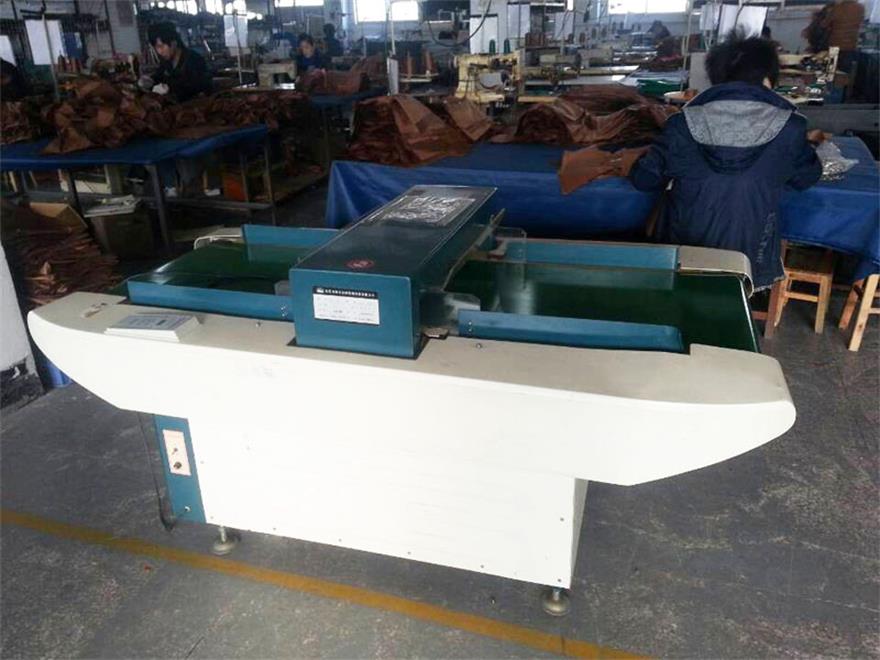
First, the factory completes production and final quality control. For cosmetic bags that means cut-and-sew assembly, hardware and zipper installation, decoration (printing, embroidery or embossing), and a needle-and-metal inspection pass before anything is packed. Second, each unit is prepped to Amazon’s standard: poly-bagged with the required suffocation warning, the FNSKU barcode applied so it scans cleanly, and any multipacks or sets bundled and labeled as a single sellable unit. Third, units are packed into export cartons that respect Amazon’s size and weight limits, with carton-level shipping labels generated from your Seller Central shipping plan. Fourth, a freight forwarder collects the cartons, books air or ocean transport, and clears US customs as (or on behalf of) the importer of record. Fifth, the forwarder’s domestic partner delivers the cartons or palletized freight to the exact fulfillment center Amazon assigned, where they are checked in and your inventory goes live.
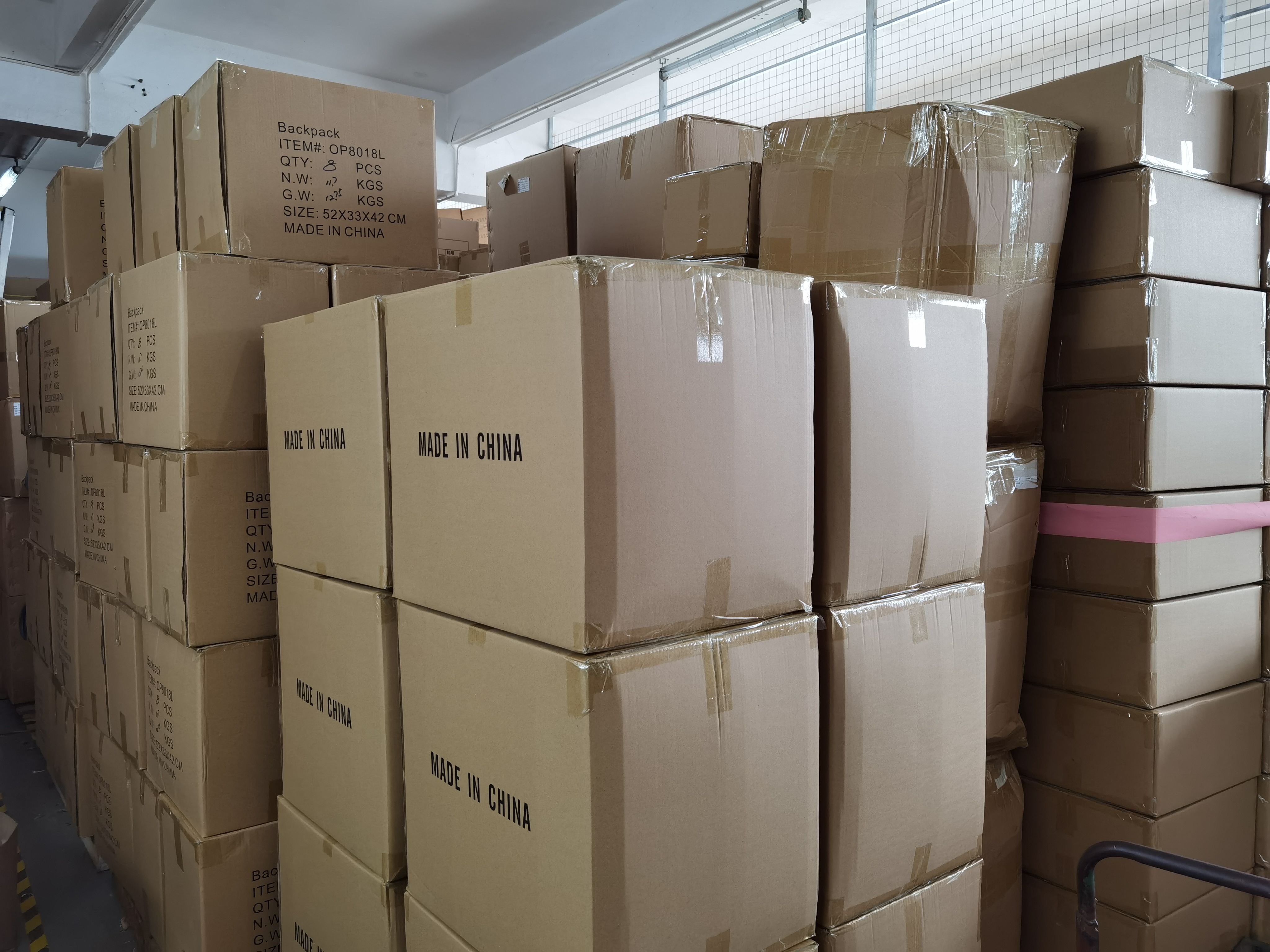
The takeaway: the further upstream you fix a problem, the cheaper it is. A labeling error caught at the factory costs minutes; the same error caught at the Amazon dock can cost days of lost sales plus per-unit prep fees. That is why experienced sellers treat their OEM and private-label partner as the first link in their logistics chain, not just a manufacturer.
Before you book any freight, be clear on which fulfillment model you are shipping for, because it changes packaging, labeling and routing.
FBA (Fulfilled by Amazon) means you send inventory to Amazon’s warehouses and they pick, pack and ship to customers. This is the dominant model for cosmetic bag sellers because the product is small, light and benefits from Prime badging. FBA imposes strict prep and labeling rules — the entire second half of this guide exists because of them.
FBM (Fulfilled by Merchant) means you store and ship orders yourself, often from a third-party warehouse or your own location. FBM removes Amazon’s prep rules but puts storage and last-mile logistics on you. Many brands run a hybrid: bulk inventory at a 3PL, topped into FBA in waves to control storage fees.
For a new private-label launch, FBA is almost always the right call: it unlocks Prime, simplifies customer service, and lets you focus on product and marketing rather than warehousing. The trade-off is that your factory must ship goods that pass Amazon’s receiving rules on the first try. When you brief your manufacturer, say explicitly “this is going into Amazon FBA” so they prep accordingly — a detail we confirm on every custom cosmetic bag order bound for the US.
The single biggest cost lever in your shipping plan is air versus sea. Cosmetic bags have an unusual freight profile: they are light but bulky. A carton of soft pouches weighs little but fills a lot of cubic space, which means ocean freight is usually billed by volume (cubic meters, CBM) rather than actual weight, and air freight is billed on whichever is greater of actual or volumetric weight. That asymmetry drives the decision.
| Factor | Express courier | Air freight | Sea LCL | Sea FCL |
|---|---|---|---|---|
| Typical transit (China→US) | 3–6 days | 5–10 days | 28–40 days | 25–38 days |
| Best order size | < 100 kg | 100–500 kg | 1–15 CBM | 15+ CBM |
| Relative cost per bag | Highest | High | Low | Lowest |
| Customs handling | Often included | Broker needed | Broker needed | Broker needed |
| Best for | Samples, tiny first orders | Launch & urgent restock | Standard replenishment | Large, planned volume |
A useful rule of thumb: if your shipment is under roughly 200 kg and you need it fast, air or express is justified despite the cost. Above that, and when you have planned ahead, ocean freight typically cuts your per-bag logistics cost by 60–80%. Because cosmetic bags are dimensional, ask your factory to compress and nest items where the design allows — folding toiletry bags and flat pouches ship far more densely than rigid cases, which directly lowers your CBM and your ocean bill.
Drilling into the four modes helps you match each shipment to the right service.
Express courier (DHL, FedEx, UPS) is door-to-door, duties often handled, and fast. It is ideal for samples and very small first production runs — say, the first 200–500 units of a new SKU you want live before committing to a container. The per-kilogram rate is high, so it stops making economic sense as volume grows.
Air freight moves on commercial cargo flights, airport-to-airport, with a forwarder arranging pickup and customs. It is the workhorse for launches and urgent restocks: faster than sea, cheaper than express at mid volumes. Expect 5–10 days plus customs.
Sea LCL (Less than Container Load) shares a container with other shippers. You pay for the space your cartons occupy, measured in CBM. LCL is the default for steady FBA replenishment of a few cubic meters — cheap, predictable, and slow. Budget 28–40 days port-to-warehouse.
Sea FCL (Full Container Load) gives you an entire 20ft or 40ft container. Once your order fills roughly 15 CBM or more, FCL is the lowest cost per bag and the most secure, since your goods are sealed and not co-mingled. Many established cosmetic bag brands move to FCL as soon as their reorder cadence supports it.
The number that actually determines your profit is landed cost — the all-in cost to get one finished bag into the FBA warehouse, ready to sell. Sellers who price off the factory unit price alone routinely underprice and lose money. Landed cost has five components:
| Cost component | What it covers | Typical share |
|---|---|---|
| Unit (FOB) price | The bag itself, ex-factory in China | 55–70% |
| Freight | Air or sea, China to US warehouse | 10–25% |
| Duty & tariffs | Import duty based on HTS code | 5–20% |
| FBA prep | Polybag, FNSKU label, bundling | 2–6% |
| Forwarder & misc fees | Customs clearance, docs, last mile | 3–8% |
A worked example: suppose a custom nylon makeup bag has an FOB price of $2.10. By sea LCL, freight might add $0.35, duty at a representative rate adds $0.32, FBA prep at the factory adds $0.08, and forwarder fees spread to $0.15 per unit. Your landed cost is about $3.00 per bag — roughly 43% above the FOB price. If you had priced your Amazon listing assuming $2.10 cost, your margin math would be badly wrong. Always build the full landed-cost stack before you set a retail price, and re-run it whenever freight rates or tariffs move. Choosing the right material and construction up front also moves this number: lighter, more compressible fabrics lower both FOB and freight.
Every product imported into the US is classified under a Harmonized Tariff Schedule (HTS) code, and that code sets the duty rate. Cosmetic and toiletry bags generally fall within Chapter 42 of the HTS (articles of leather; travel goods, handbags and similar containers), with the exact subheading depending on the outer material — for example, bags with an outer surface of plastic sheeting, of textile materials, or of leather are classified differently and can carry different rates.
Three things matter for cosmetic bag sellers in 2026:
Because rates shift, treat the duty line in your landed-cost model as a variable you re-verify, not a constant. A reputable forwarder or licensed broker will give you the current effective rate for your specific HTS code. This is also why our sourcing FAQ recommends agreeing the material spec early — it locks the classification basis and avoids surprises at the border.
Amazon’s receiving rules are unforgiving, and cosmetic bags touch several of them. Getting prep right at the factory is the difference between a clean check-in and a blocked shipment.
Polybagging. Most cosmetic bags ship in a clear poly bag to keep them clean during fulfillment. Any poly bag with an opening of 5 inches or more must carry a legible suffocation warning. The bag should be transparent, sealed, and sized so the warning and the FNSKU barcode are both scannable through the plastic.
Sets and multipacks. If you sell a three-piece cosmetic bag set as one ASIN, it must arrive as a single bundled unit, labeled as a set, so Amazon does not treat the pieces as separate sellable items. Mark it clearly — “sold as set, do not separate.”
Inserts and dust bags. Premium travel makeup bags often include a branded insert card or dust bag. These get assembled into the unit at the factory so each FBA unit is complete and identical.
Doing this prep in China, on the production line, costs a few cents per unit. Letting Amazon do it through their prep service costs far more per unit and adds handling time. The economics overwhelmingly favor factory prep — provided your manufacturer knows the current rules.
Barcoding confuses many first-time sellers, so here is the clean version.
A UPC (or GTIN) is the global product identifier you use to create the listing in Seller Central. An FNSKU is Amazon’s internal barcode that ties a physical unit to your specific seller account and listing. For FBA, you choose how units are tracked: under Amazon’s commingled model your goods are pooled with other sellers’ identical items (rarely advisable for branded bags), or under the stickered / labeled model each unit carries its own FNSKU so only your inventory fulfills your orders. Branded private-label sellers should almost always use FNSKU labeling.
The FNSKU is generated in your Seller Central account. You then send the barcode artwork to your factory, which prints and applies it to each unit’s polybag during prep. The label must be flat, fully scannable, and not wrapped around a seam or curve. When you place a private-label order, supply the FNSKU file at the prep stage and confirm a scan test on the first finished units before the full run is labeled.
Amazon also regulates the boxes themselves. Cartons that violate the limits get flagged at receiving and can incur fees.
A capable factory builds cartons to these rules by default: right-sized boxes, accurate counts, labels in the correct spots, and a packing list that matches the shipping plan. That discipline is part of why we document carton specs in every order’s production and packing flow.
“How long until my cosmetic bags are selling on Amazon?” is really three timelines stacked together. Plan each one.
| Stage | What happens | Typical duration |
|---|---|---|
| Sampling (first order) | Pre-production sample, approval, revisions | 5–10 days |
| Production | Cutting, sewing, decoration, QC, FBA prep | 7–15 days |
| Transit — air/express | Flight plus customs clearance | 5–10 days |
| Transit — sea LCL/FCL | Vessel plus port and customs | 25–40 days |
| FBA receiving | Check-in until inventory is sellable | 1–7 days |
For a reorder shipped by sea, a realistic end-to-end timeline is roughly 35–55 days from issuing the PO to the listing being replenished. For an air-freighted launch, 20–30 days. The practical lesson is to reorder early — trigger your next production run while you still have 6–8 weeks of FBA stock, so a slow vessel or a customs delay never stocks you out. At FUYUAN we hold MOQ at 500 units with a standard 7–15 day production window, which keeps the production leg of this chain short and predictable.
Incoterms decide where the seller’s responsibility ends and yours begins. Two matter most for FBA.
DDP (Delivered Duty Paid) means the shipper or forwarder handles everything — export, freight, US customs clearance, duties and final delivery to the warehouse. For new sellers without their own customs broker, DDP is the simplest path: a single quoted price gets your bags to the FBA door. The trade-off is that you must trust the forwarder to classify and declare goods correctly under your name or theirs, and DDP pricing bundles duty, so confirm what HTS rate they assumed.
DAP / DDU (Delivered at Place, duties unpaid) means the goods are delivered but you (the importer of record) clear customs and pay duty. This gives you more control and visibility over classification and valuation, but requires you to have a customs broker and, ideally, a customs bond. Growing brands often graduate to this model for transparency.
Whichever you choose, make sure the importer of record is correctly established — Amazon will not act as importer of record, so it must be you or an arranged party. Clarify this with your forwarder before the first shipment, not after it lands.
Your forwarder is the partner who turns “cartons in Shenzhen” into “inventory in an Amazon warehouse.” A good one prevents problems; a weak one creates them. Evaluate on:
Many factories, including ours, work with vetted forwarders and can recommend one or coordinate directly so production timing and vessel booking line up. If you prefer your own forwarder, simply share their details and we hand off prepped, labeled, correctly carton-marked goods at the agreed Incoterm. Either way, the goal is a seamless link from our Shenzhen production line to your FBA shipment.
After thousands of FBA-bound shipments, the failure modes are predictable — and nearly all are preventable at the factory.
Notice that every item on this list is solved before the goods leave China. That is the core argument for treating FBA prep as a manufacturing step, performed by a factory that ships to Amazon every week, rather than a logistics afterthought.
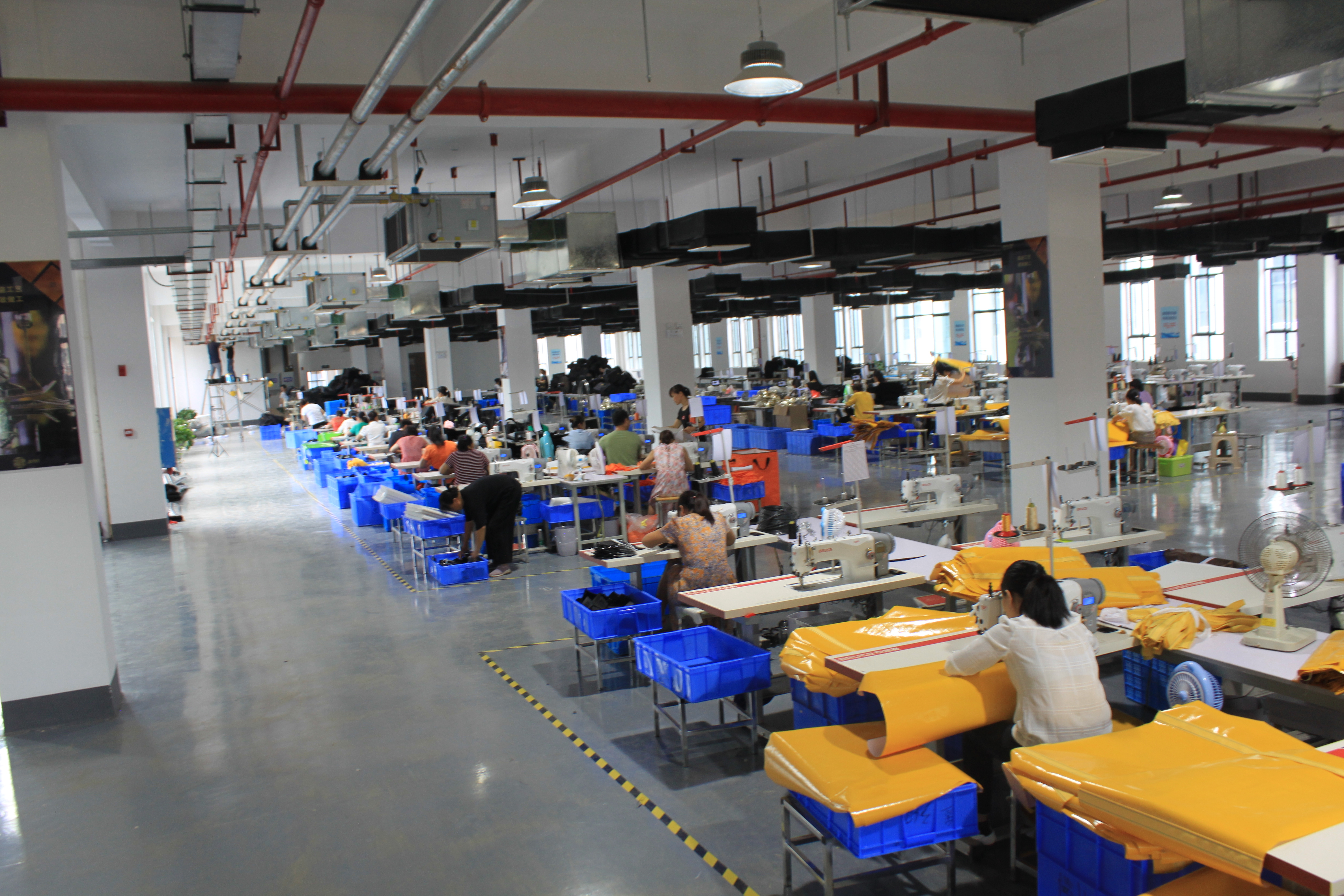
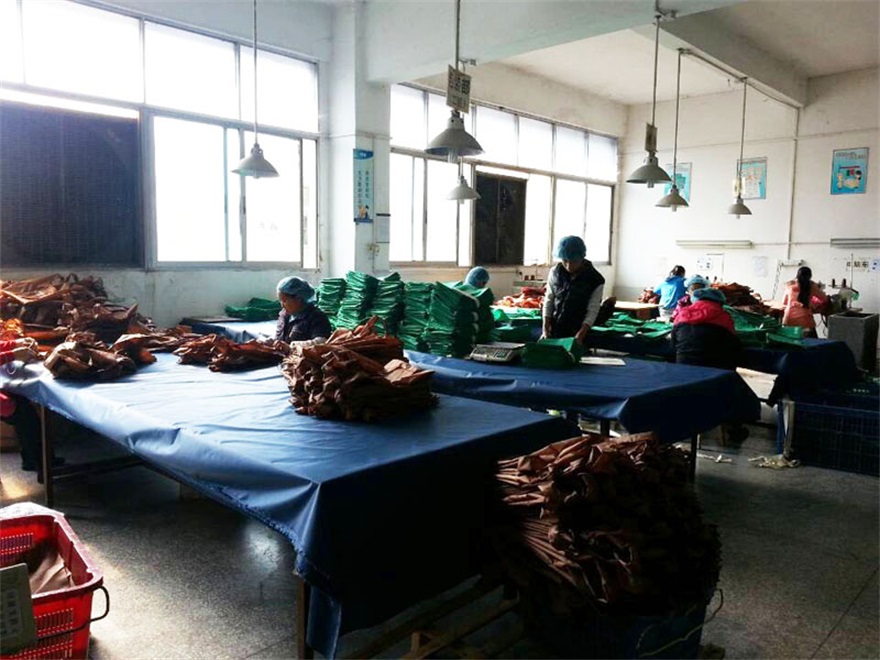
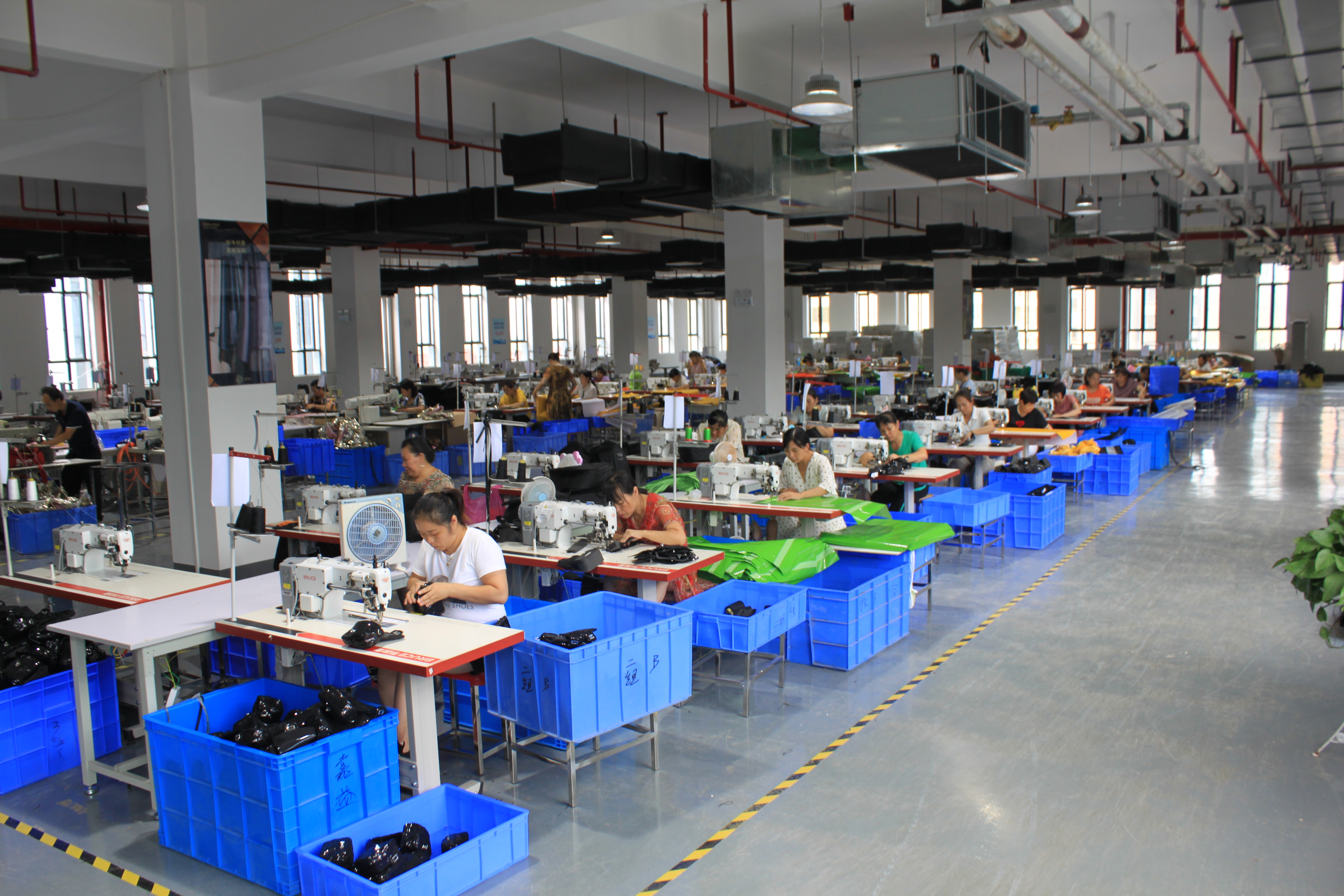
FUYUAN BAG FACTORY has manufactured custom cosmetic and toiletry bags since 2003 — more than 20 years of OEM/ODM work from our Shenzhen headquarters and Jiangxi production base. With 100+ skilled workers, 100+ industrial sewing machines and over 2,000 m² of in-house capacity, we control the full chain from material to packed export carton, which is exactly what reliable FBA shipping requires.
On compliance and trust, we operate under BSCI, SEDEX and ISO 9001 systems and have passed the Disney FAMA and Coca-Cola supplier compliance programs. Our materials meet EU REACH, US CPSIA, California Proposition 65, SGS and RoHS requirements — the same standards Amazon and US retailers expect. We have produced for brands including Coca-Cola, Disney, Tencent and Baidu, and export to 60+ countries.
For Amazon sellers specifically, that translates into practical support: MOQ from 500 units, 7–15 day production, factory-applied polybags and FNSKU labels, Amazon-compliant carton sizing and marking, needle-detection on every unit, and pre-shipment QC with photo reports. We can ship FOB for your own forwarder or coordinate DDP delivery straight to the fulfillment center. Browse our brand case studies to see how we have handled launches and repeat FBA programs for international beauty brands.
Sea freight is dramatically cheaper per unit for any planned, mid-to-large order — often 60–80% less than air — because cosmetic bags are light but bulky and ocean freight is priced largely by volume. Reserve air or express for samples, launches and urgent restocks where speed outweighs cost.
Yes, and it should. You generate the FNSKU in Seller Central, send the barcode file to the factory, and they print and apply it to each unit’s polybag during prep. Factory labeling costs a few cents per unit versus much higher Amazon prep fees, and it speeds up receiving. Always scan-test the first labeled units.
The importer of record pays duty. Under a DDP arrangement the shipper or forwarder pays it and bundles it into your price; under DAP/DDU you pay it through your own customs broker. Amazon will never act as importer of record, so the importer must be you or an arranged party — confirm this before your first shipment.
Our MOQ is 500 units with a standard production lead time of 7–15 days, plus sampling for first orders. Add transit (5–10 days air or 25–40 days sea) and 1–7 days FBA receiving to plan your total timeline. Reorder while you still hold 6–8 weeks of stock.
Nearly all rejections come from labeling and carton issues, not the product: missing or unscannable FNSKU, no suffocation warning, overweight cartons, or contents that don’t match the shipping plan. A factory that ships to Amazon regularly prevents all of these by prepping correctly at the source.
Cosmetic and toiletry bags generally fall under HTS Chapter 42, with the exact subheading depending on the outer material (plastic, textile or leather). Base duty plus any additional China-origin tariffs change with trade policy, so confirm the current effective rate with a licensed customs broker before each shipment rather than relying on a past figure.
If you are sourcing custom cosmetic, makeup or toiletry bags for Amazon and want a manufacturer who ships FBA-ready out of Shenzhen — correct polybags, FNSKU labels, compliant cartons and on-time production — we would be glad to help. Send us your design, target material and quantity, and we will quote unit price, sampling and a realistic FBA timeline.
Email: sales002@fuyuanbag.com | Tel: +86-755-21035273
Explore our custom cosmetic bag range, our OEM & private-label service, or contact us to start your next order.


20+ years focused on cosmetic bags
sales002@fuyuanbag.com
+86-755-21035273
4F No.B, XinTian Innovative Industry Area, GuanLan Street, Baoan District, Shenzhen,Guangdong,China