20+ years focused on cosmetic bags

 FUYUAN
  2026-06-23


By Steven Yuan, FUYUAN BAG FACTORY | Updated: June 23, 2026
There are six reliable ways to put your logo on a custom cosmetic bag: silk screen printing, heat transfer and digital/sublimation printing, embroidery, embossing and debossing, woven labels and metal plates, and full branding through custom hardware, printed linings and hang tags. The right choice is not about which one looks best in isolation. It depends on your bag material, your order quantity, your target retail price, and how many colors your artwork uses.
This article walks through all six methods the way we explain them to private-label beauty brands every week on the factory floor. For each one you will get the realistic cost direction, minimum quantities, durability, the materials it works on, and the mistakes that quietly ruin a logo at scale. By the end you should be able to look at your own bag and your own budget and say, with confidence, exactly how your brand should be applied.
Disclaimer: the cost, MOQ and durability figures below are practical manufacturing ranges based on 20+ years of OEM production, not fixed quotes. Decoration behavior varies with substrate, ink system and artwork; always confirm against a physical pre-production sample and, for any regulated market, against an accredited test lab.
If you remember nothing else, remember this decision shortcut that we use on incoming inquiries:
Most successful Amazon listings actually use two methods at once: a clean primary mark (printed or embossed) plus one tactile detail (a metal zip puller or a woven label). That combination photographs well in the listing gallery and survives the customer's hands in real life. You can see our full menu of decoration options on the OEM and private-label service page.
On a marketplace, your logo does three jobs at once, and the decoration method affects all three.
First, it sells in the photo. A shopper decides in well under a second whether your bag looks $9 or $29. A crisp embossed mark on PU or a tidy embroidered logo on canvas reads as "considered product." A blurry, off-center heat transfer reads as "drop-shipped." The method you choose is, in practice, part of your main-image conversion rate.
Second, it survives returns. Cosmetic bags get wet, stuffed, and thrown into checked luggage. A logo that peels, cracks or fades generates one-star reviews that mention "cheap" and "fell apart," and those reviews cost far more than the few cents you saved on decoration. Durability is a marketing decision disguised as a production decision.
Third, it protects your brand. A permanent, hard-to-copy mark — embroidery, a debossed plate, a woven label sewn into the seam — makes your product harder to counterfeit and easier to defend in an Amazon Brand Registry dispute. Cheap surface prints are the easiest to clone.
So before comparing prices, decide what each logo on the bag is for. The exterior hero logo, the interior label, and the zip-pull mark can each use a different method, chosen for its job.
Silk screen (screen printing) pushes ink through a fine mesh stencil onto the bag panel, one screen per color. It is the workhorse of cosmetic bag branding: low cost per piece, excellent opacity, and a flat, clean finish that photographs sharply.
Best for: bold, solid logos with 1–3 spot colors on flat materials such as nylon, polyester, PU, cotton and canvas. It is ideal when your design is a wordmark or a simple icon rather than a photograph.
Cost direction: the lowest per-unit method at volume. You pay a one-time screen/setup charge per color, then the marginal cost per bag is small. The more units you run, the more that setup disappears into the piece price.
Watch-outs: every additional color means another screen, another setup, and tighter registration tolerance. Fine gradients and photographic detail are not silk screen's strength — push those toward digital or sublimation. On stretchy or heavily textured fabric, ink can distort, so we test the exact substrate first.
Silk screen is also the most forgiving method to scale to tens of thousands of pieces while holding color, which is why it dominates promotional and entry-price listings. See real examples on our silk-screen printed cosmetic bag page.
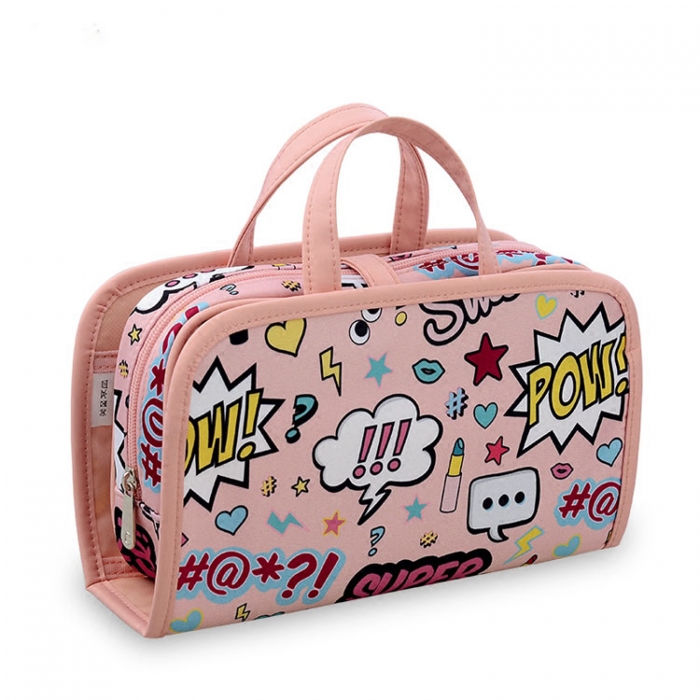
When the artwork has gradients, photographs, fine detail or more colors than silk screen can handle cleanly, you move to the print family: heat transfer, digital printing, and dye sublimation.
Heat transfer prints your design onto a carrier film, then bonds it to the bag with heat and pressure. It handles full color and fine detail, and it works on a wide range of materials including those that are hard to screen. The trade-off is that a transfer sits on top of the surface, so on low-quality film it can crack or peel over time — film and press quality matter enormously.
Digital printing prints directly onto the panel for short-to-medium runs with no per-color screen cost, which makes it economical for complex, low-color-count-agnostic artwork at moderate volume. Explore it on our digital printing cosmetic bag page.
Dye sublimation turns ink into gas that dyes the fibers of polyester fabric. Because the color becomes part of the fiber rather than a layer on top, sublimation does not crack or peel and allows true edge-to-edge, all-over prints — but it only works properly on polyester and other synthetic, light-colored substrates.
Best for: brand patterns, photographic art, multi-color illustrations and all-over designs. Cost direction: higher than silk screen per piece for simple logos, but far more economical than silk screen once your design needs many colors. Compare options on the heat transfer printing page, and remember the golden rule: sublimation for polyester, transfer/digital for everything else.
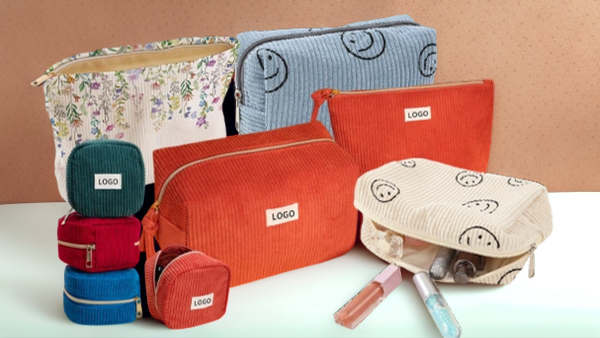
Embroidery stitches your logo into the fabric with thread. Nothing else signals "quality" on a textile bag quite as instantly — it has depth, texture and a tailored, permanent look that printing cannot fake.
Best for: canvas, cotton, corduroy, denim, twill and other woven textiles. It is the natural choice for eco, artisan, heritage and premium-casual beauty brands. Durability: outstanding; stitched thread survives washing, abrasion and years of use.
Cost direction: a one-time digitizing charge converts your logo into a stitch file, then cost scales with stitch count and logo size. Small, simple logos are very affordable; large, dense, multi-color logos cost more because they take more thread and machine time.
Watch-outs: embroidery cannot reproduce fine gradients, tiny text or photographic detail — it works in solid thread colors and clean shapes. On thin or stretchy material it needs backing/stabilizer to avoid puckering. And there is a practical minimum legible size; below it, your wordmark turns to mush, so we will advise simplifying small logos.
See stitched examples on our embroidered cosmetic bag page.
Embossing presses your logo so it rises above the surface; debossing presses it so it sinks below. Both use a heated metal die under pressure and create a tactile, tone-on-tone mark — your logo in the same color as the bag, defined by light and shadow rather than ink.
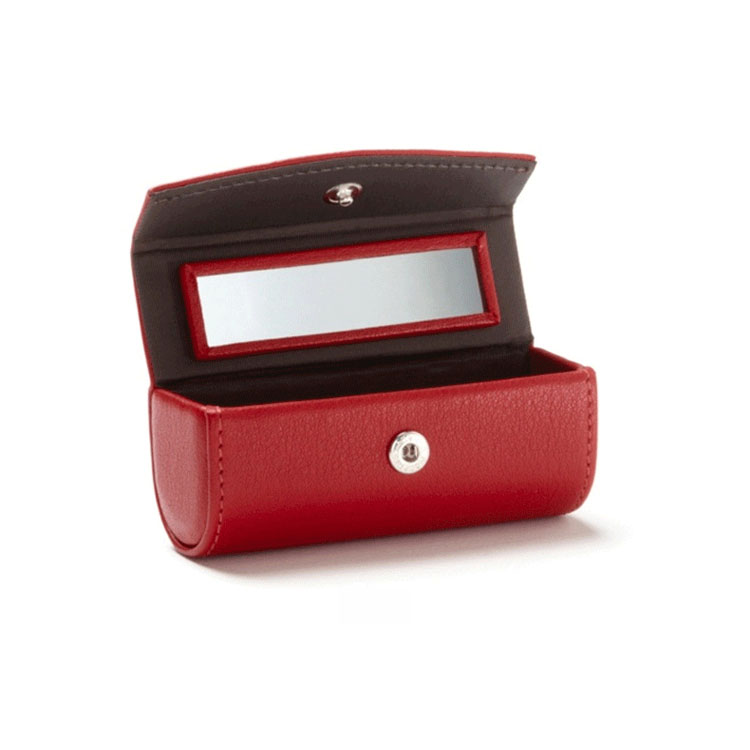
Best for: PU, vegan leather and genuine leather, plus some coated and structured fabrics. This is the signature look of quiet-luxury beauty brands: no loud color, just a confident pressed mark. Add foil stamping (gold, silver, rose gold, holographic) on top of a deboss when you want the logo to catch the light.
Cost direction: a one-time die/plate is engraved from your logo, then per-piece cost is low. Foil adds material and a second pass. Durability: excellent — the mark is physically formed into the material and will not peel; it is part of the surface forever.
Watch-outs: emboss/deboss needs enough material thickness to hold the impression, so very thin or highly textured surfaces are poor candidates. Fine detail and tiny text can fill in under pressure, so logos are simplified for clean results. Genuine and faux leather respond differently to heat, so we always strike a sample on your exact material before the run. Explore the finish on our embossed cosmetic bag page.
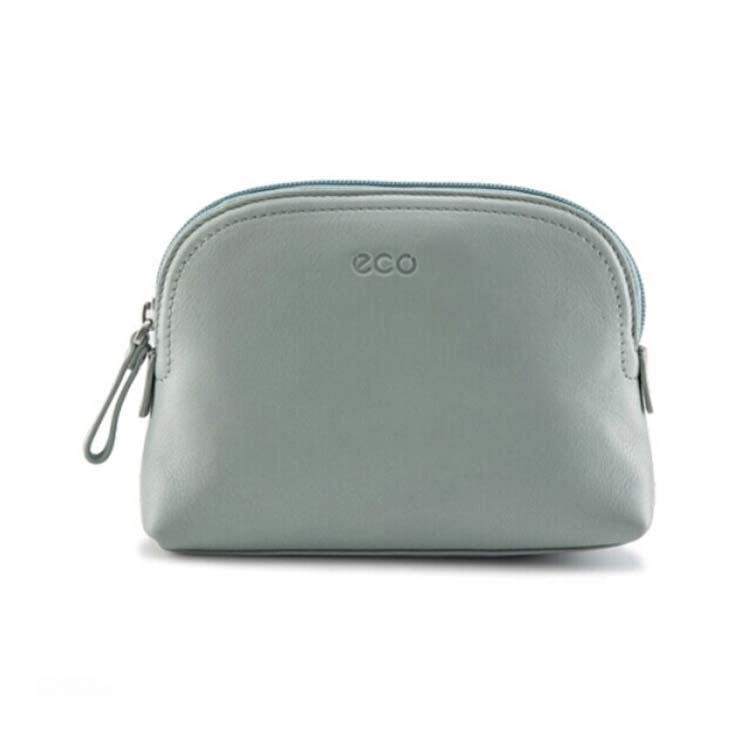
Sometimes the logo is not applied to the bag — it is an object attached to the bag. This family adds dimension and a hardware-grade feel.
Woven labels are small fabric tags with your logo woven in thread, sewn into a seam, the zip tape, or the interior. They are inexpensive, durable, and the standard way to brand the inside of a bag so the exterior stays clean.
Leather and PU patches are cut and (often) embossed, then stitched or riveted on. They add a rugged, crafted accent that suits travel, men's grooming and heritage lines.
Metal plates and metal logos are made from a custom mold in your shape, then plated (gold, silver, gunmetal, rose gold) and attached. Nothing reads as "premium hardware" faster, and a metal mark is very hard to counterfeit — but it carries the highest tooling cost of the group because of the custom mold.
Cost direction: woven labels are cheap; leather patches are moderate; metal plates carry a one-time mold cost plus a higher per-unit price. Durability: all three are excellent when attached correctly; the only real risk is a weak stitch or rivet, which is a QC issue we control on the line.
These attached marks are the easiest way to make a bag feel two price tiers above its material cost, which is why we recommend at least one of them for any brand chasing a premium Amazon position. Browse base styles to combine them with on our custom cosmetic bag wholesale range.
The sixth "way" is really a mindset: branding the whole bag, not just one panel. Once your primary logo is decided, these details turn a generic pouch into an unmistakable brand experience — and they photograph beautifully for a listing gallery and an unboxing.
None of these replace your hero logo; they multiply it. A brand that prints a clean mark on the front, weaves a label inside, and adds a logo zip puller looks intentional from every angle — exactly the impression that supports a higher price.
Here is the at-a-glance comparison we walk buyers through. Treat the cost and MOQ columns as relative directions rather than fixed numbers — your exact figures depend on bag, size, colors and volume.
| Method | Best for | Per-unit cost | One-time tooling | Durability | Premium feel |
|---|---|---|---|---|---|
| Silk screen | 1–3 color logos, big runs | Lowest | Screen per color | Good | Medium |
| Heat transfer | Full-color, many materials | Low–medium | Low | Medium (film-dependent) | Medium |
| Digital / sublimation | Photographic, all-over (poly) | Medium | Low | Excellent (sublimation) | Medium–high |
| Embroidery | Textile bags, premium casual | Medium | Digitizing fee | Excellent | High |
| Emboss / deboss / foil | PU, leather, quiet luxury | Low–medium | Engraved die | Excellent | High |
| Woven label / leather patch / metal plate | Premium accents, anti-copy | Low–high | Mold (metal) | Excellent | Highest (metal) |
The pattern is clear: surface prints win on cost, while pressed, stitched and attached marks win on durability and perceived value. Your job is to spend the premium where the customer actually looks and touches.
This is the step most new brands skip, and it is the one that causes reprints. A decoration method is only as good as its bond with the substrate.
| Material | Recommended methods | Avoid / caution |
|---|---|---|
| PU / vegan leather | Emboss, deboss, foil, silk screen, metal plate | Sublimation (won't dye), heavy embroidery on thin PU |
| Genuine leather | Emboss/deboss, foil, metal plate, patch | Heat transfer (heat sensitivity) |
| Polyester | Sublimation, silk screen, heat transfer, woven label | — |
| Nylon | Silk screen, heat transfer, woven label | Sublimation (limited) |
| Canvas / cotton | Embroidery, silk screen, patch | Sublimation (cotton won't take it) |
| Corduroy / textured fabric | Embroidery, woven label, patch | Fine silk screen (texture distorts ink) |
| Velvet / quilted | Embroidery, metal plate, woven label | Emboss (pile crushes), fine print |
| Clear PVC / TPU / PEVA | Silk screen, attached metal/woven tag | Embroidery, emboss |
If you are still choosing a base material, our material pages — for example PU cosmetic bags — show which decoration each fabric supports best, and our team will steer your artwork toward the method that will actually hold.
Most logo problems are not production problems — they are file problems. Send the right artwork and your first sample is usually right. Here is what every decoration method needs from you:
If you are not sure how to package all of this, send us your logo and target bag and we will build the decoration spec for you. It becomes part of your tech pack, and the tech pack is what makes every future reorder identical.
Three numbers decide whether a decoration method fits your launch budget: minimum order quantity, one-time tooling, and lead time.
MOQ. Our standard minimum is 500 pieces per style/color, and that holds across decoration methods. The decoration rarely changes the MOQ; the bag construction does. Some attached components (custom metal molds, custom woven zipper tape) may carry their own minimums, which we flag up front.
Tooling / setup. This is the one-time cost to create your logo apparatus: screens (per color) for silk screen, a digitizing fee for embroidery, an engraved die for emboss/deboss, and a custom mold for metal plates. You pay it once; every reorder reuses it. This is why your second order is often cheaper per piece than your first — the tooling is already done.
Lead time. After your pre-production sample is approved, mass production typically runs 7–15 working days, depending on quantity, decoration complexity and finishing. Methods with extra steps (foil over deboss, metal plates from a new mold, multi-position decoration) sit at the longer end. Build sampling time in before that — never skip the physical sample to save a week, because a reprint costs a month.
For a full picture of how branding fits into our build process, see our production flow and FAQ pages.
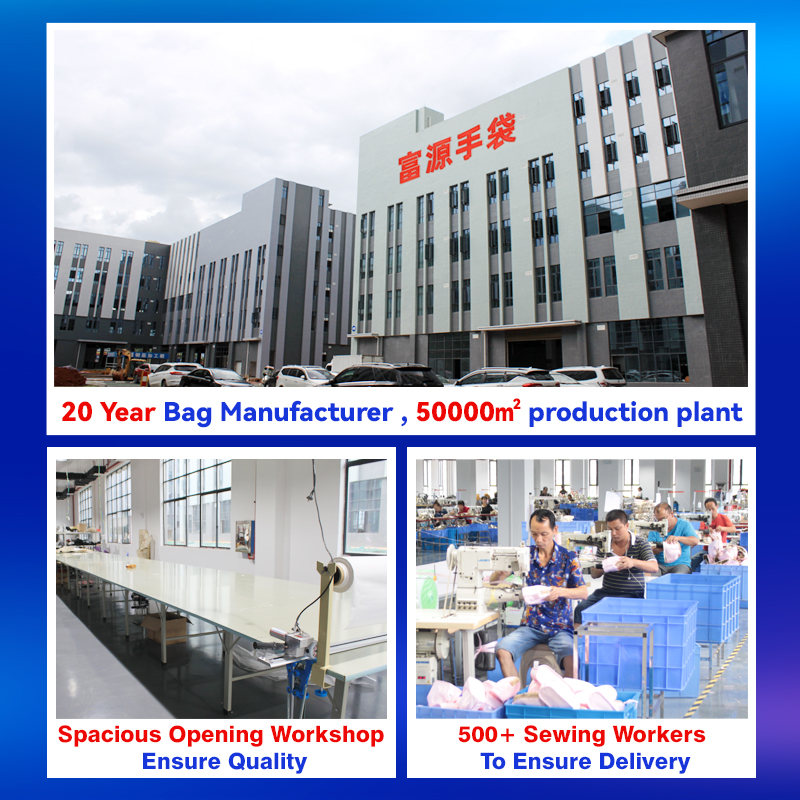
Applying a logo once is easy. Applying it identically to the 1,847th unit at 4 p.m. on day nine of a run is the actual job — and it is where cheap suppliers fail. Our branding QC runs on four gates:
This discipline is why brands that have been burned by inconsistent logos elsewhere stay with us. Consistency is not luck; it is a documented sample, a color number, and four checkpoints.
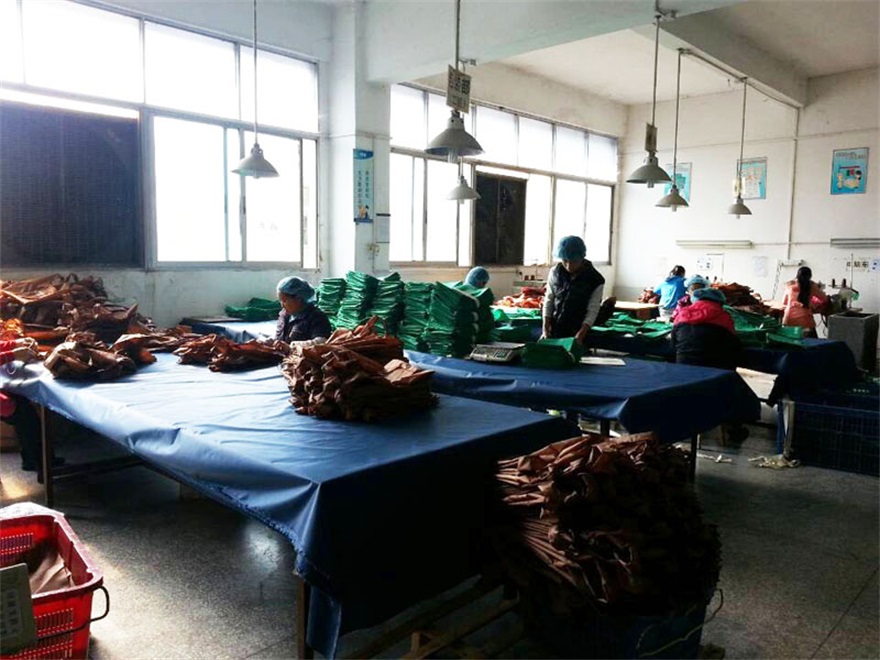
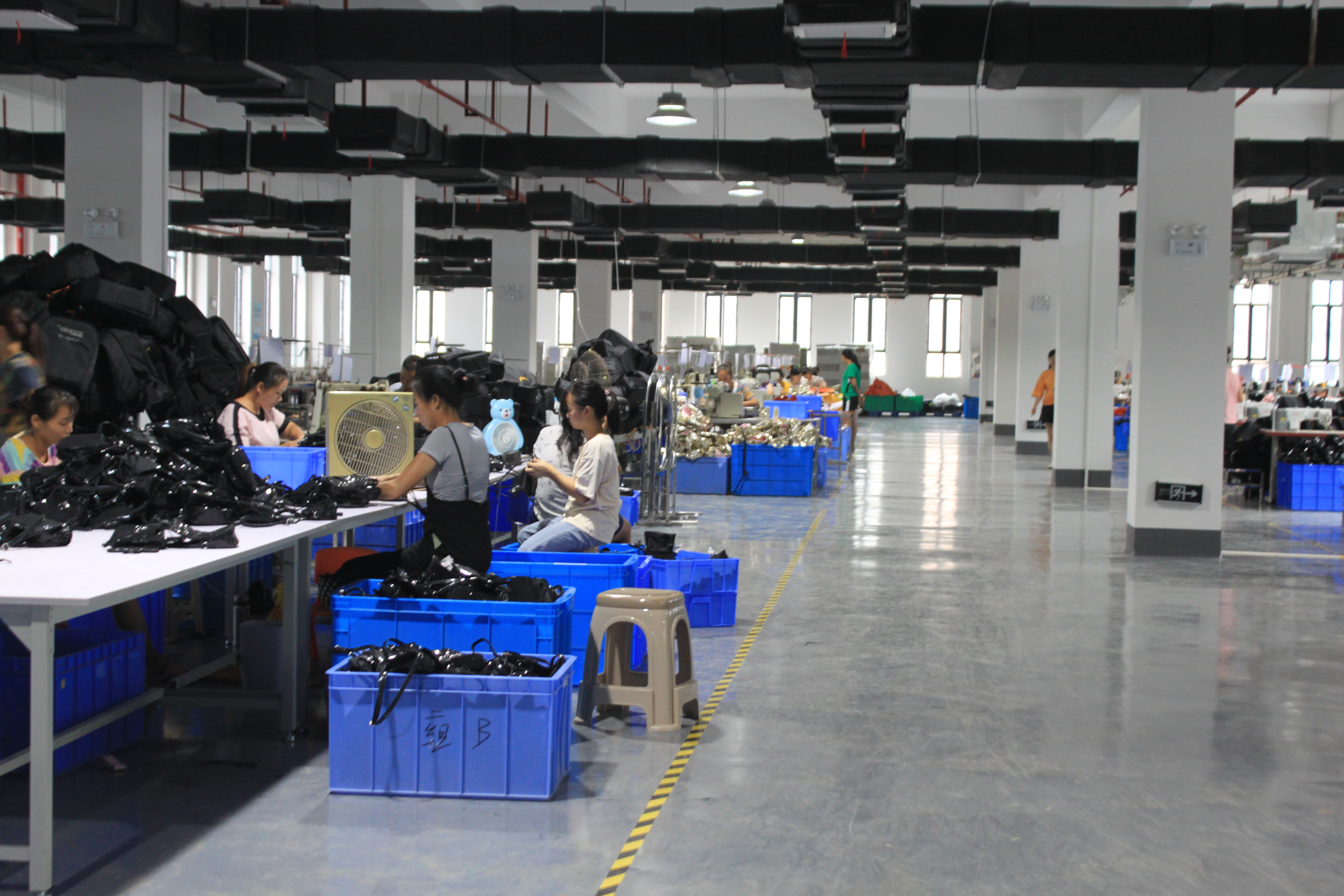
FUYUAN BAG FACTORY has specialized in custom bags since 2003 — 20+ years of OEM and ODM work, with a Shenzhen headquarters plus a Jiangxi production base, 100+ workers, 100+ industrial sewing machines and 2,000+ square meters of our own capacity. Because we run silk screen, heat transfer, digital printing, sublimation, embroidery, emboss/deboss, foil, woven labels, patches and metal plates in-house, you can combine methods on a single bag without coordinating multiple subcontractors — and without the lead-time and consistency penalties that come with outsourced decoration.
Our compliance and audit footprint backs this up: we operate under BSCI and SEDEX social-audit programs and an ISO 9001 quality system, and we have passed the Disney FAMA and Coca-Cola supplier compliance frameworks. Our materials and decoration can be specified to meet EU REACH, US CPSIA, California Prop 65, SGS and RoHS requirements when your market needs it. We have produced for brands including Coca-Cola, Disney, Tencent and Baidu, and we export to 60+ countries — which means we have applied a logo to almost every material and at almost every quality tier you can name.
Standard terms: MOQ from 500 pieces, 7–15 day production after sample approval, and full ODM design support if you want us to develop the bag as well as brand it. Read more about us on the our story page.
Silk screen printing is the lowest per-unit cost for simple 1–3 color logos at volume. You pay a one-time screen charge per color, then the marginal cost per bag is very small, so the bigger your run, the cheaper each logo becomes. For full-color artwork, digital or sublimation printing is more economical than adding many screens.
Embossing/debossing on PU or leather, embroidery on textiles, and a custom metal plate all read as premium. Metal plates and foil-stamped debossing usually feel the most high-end, while embroidery gives the richest look on fabric. Most premium listings combine a pressed or stitched mark with one tactile accent like a metal zip puller.
It can, if the wrong method is used for the material or low-quality film/ink is used. Sublimation on polyester will not peel because the color dyes the fiber. Embroidery, emboss and metal plates are essentially permanent. Surface transfers are the most peel-prone, which is why film and press quality — and a real durability test on your sample — matter.
Our standard MOQ is 500 pieces per style and color, and that generally holds regardless of decoration method. Some attached components, such as a custom metal mold or custom woven zipper tape, may carry their own minimums, which we flag before you commit.
Yes, and we recommend it. A common premium combination is a printed or embossed hero logo on the front, a woven label sewn inside, and a custom zipper pull. Because we run every method in-house, mixing them does not require multiple suppliers or extra coordination time.
Send vector artwork (AI, EPS, PDF or SVG) for screen, embroidery, emboss and metal work; high-resolution 300 dpi files for photographic digital/sublimation prints; Pantone color codes for any color you care about; and a simple placement/size drawing. With those, your first pre-production sample is usually right the first time.
Tell us your bag, your material, your artwork and your target price, and we will recommend the logo method — or combination — that delivers the look you want at the cost you need, then prove it with a physical sample before you commit to a run.
FUYUAN BAG FACTORY
Tel: +86-755-21035273
Email: sales002@fuyuanbag.com
Start your branded order on our custom service page, browse styles on our custom cosmetic bags range, or contact us for a quote and free decoration advice.


20+ years focused on cosmetic bags
sales002@fuyuanbag.com
+86-755-21035273
4F No.B, XinTian Innovative Industry Area, GuanLan Street, Baoan District, Shenzhen,Guangdong,China